Both are right,
at different stages of the same feature.
Published
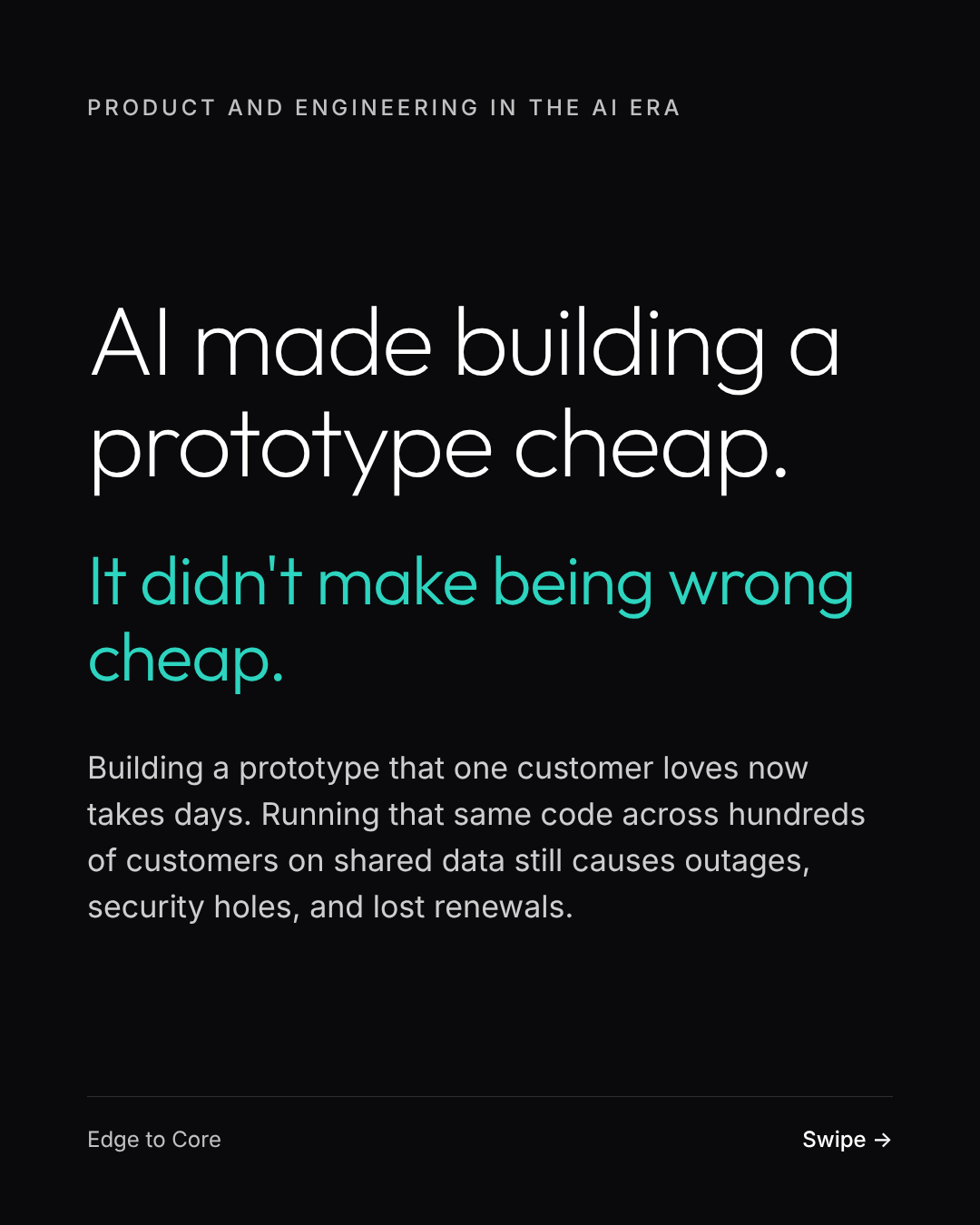
AI has made building a working version of software cheap. It has not made being wrong in production cheap.
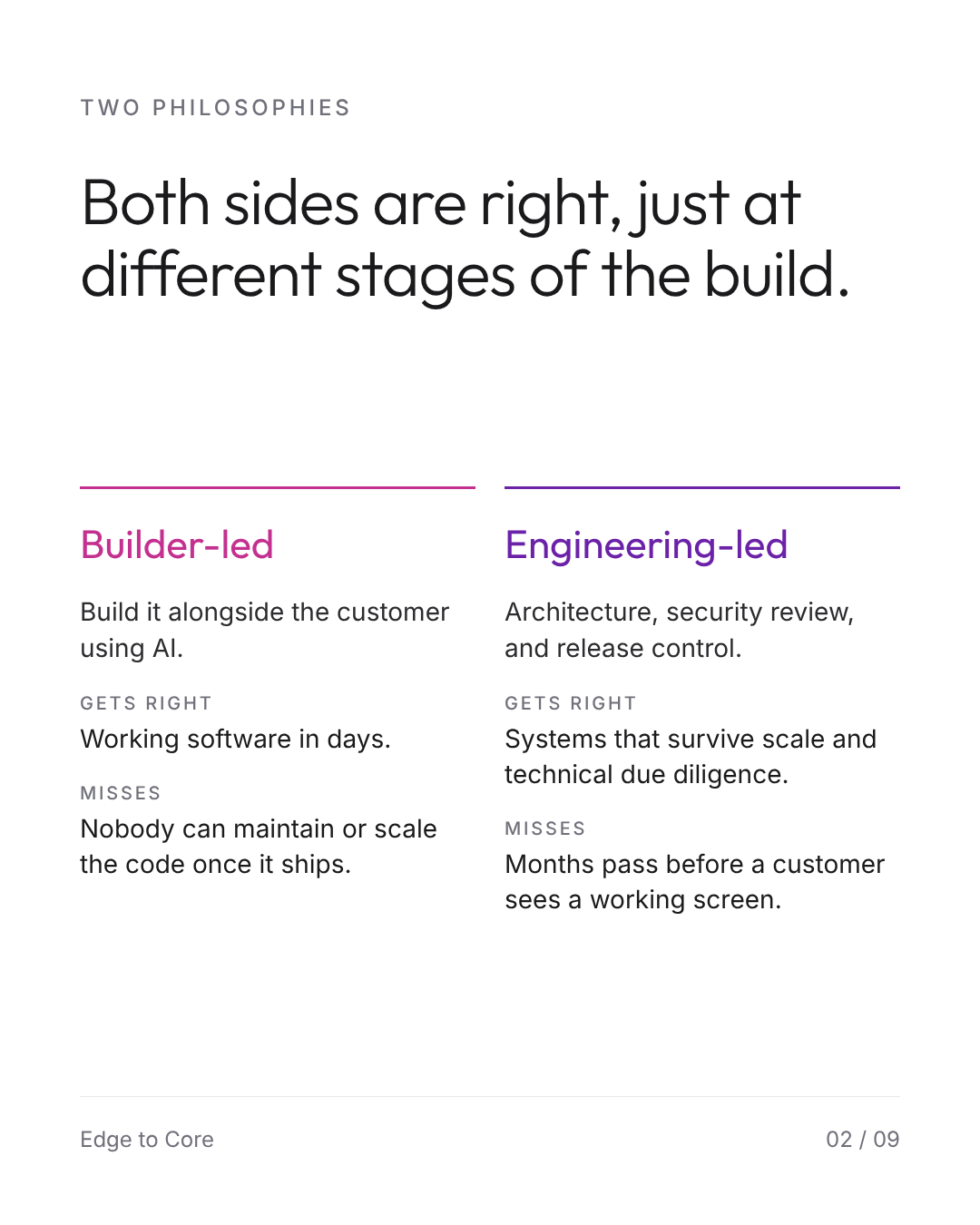
In most B2B software companies right now, I’m seeing teams split into two camps:
- Builder-led: Put AI in the hands of the people closest to the customer and get working software live in days. Great for speed, until 200 customers are running code that nobody on the engineering team can explain or maintain.
- Engineering-led: Protect the platform with architecture reviews, security checks, and release gates. It survives scale and technical diligence, but months go by before a customer sees anything.
Both camps are right. Just at different stages of the same feature.
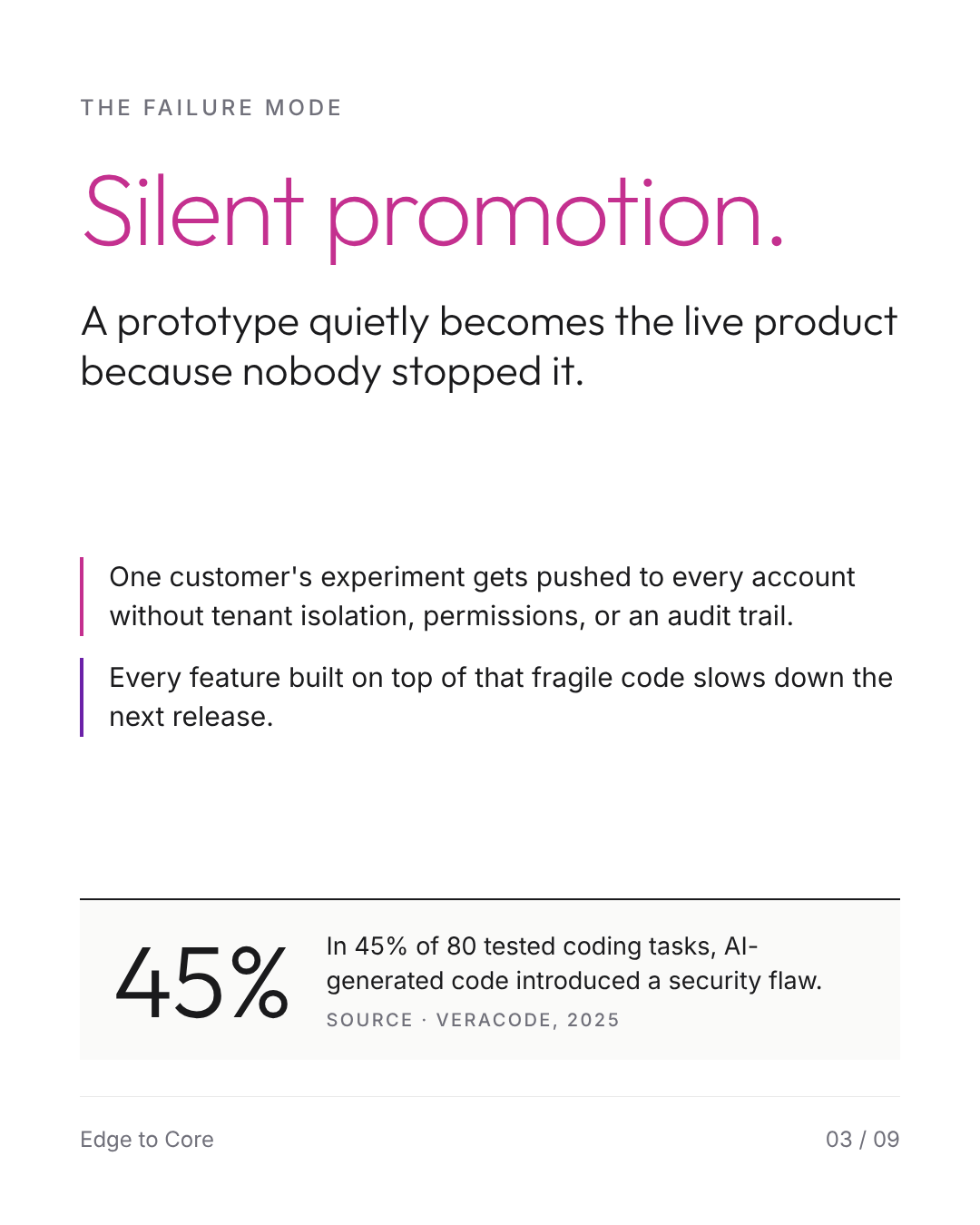
The problem starts when there is no hard line between the two. A one-customer AI prototype looks finished in a Friday demo, so it quietly becomes the product by default. I call this silent promotion.
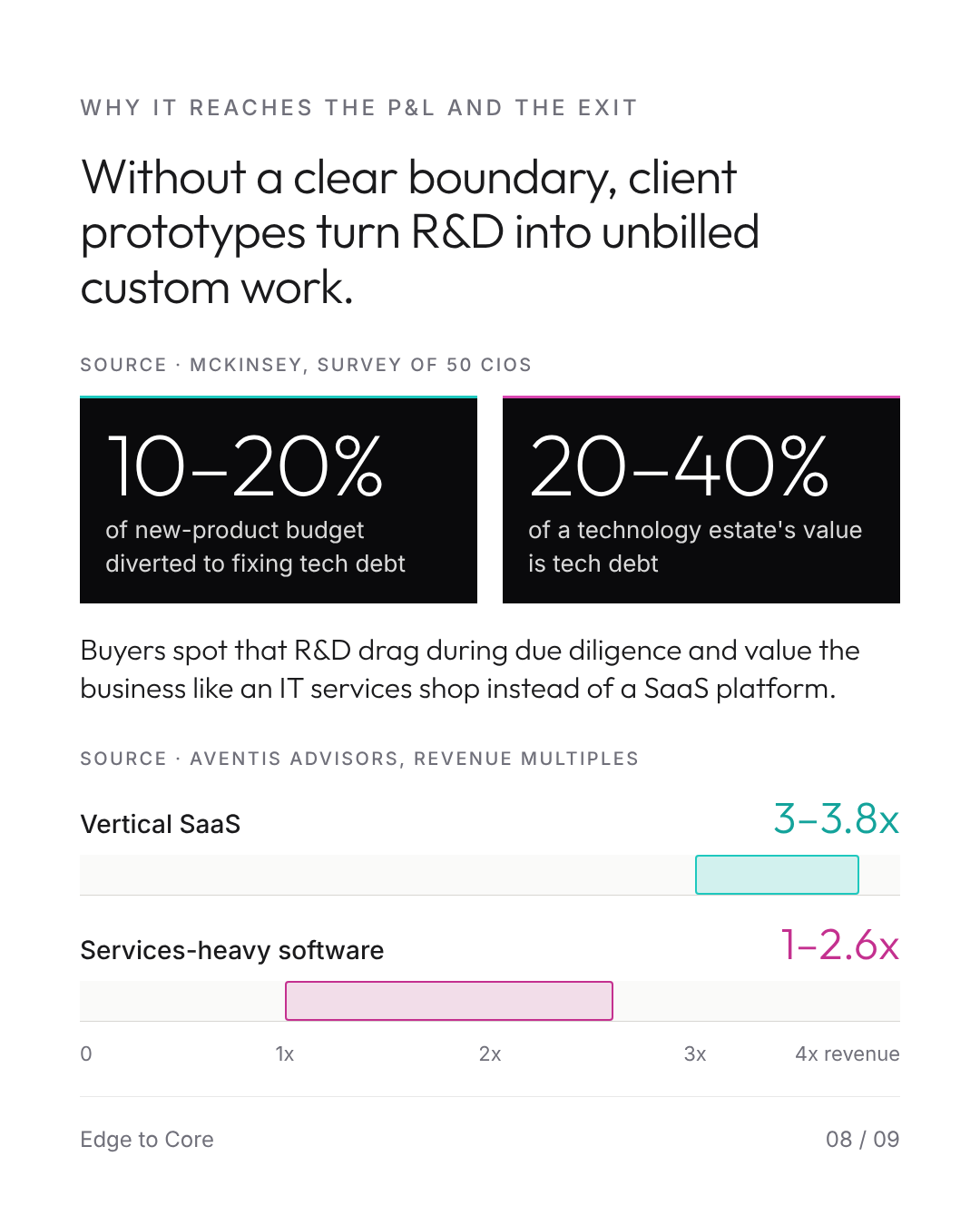
When that happens repeatedly, shortcuts pile up, releases slow down, and R&D turns into unbilled custom work. Buyers spot that bloat in diligence and price the business like a services shop (1x to 2.6x revenue) instead of vertical SaaS (3x to 3.8x, per Aventis Advisors).
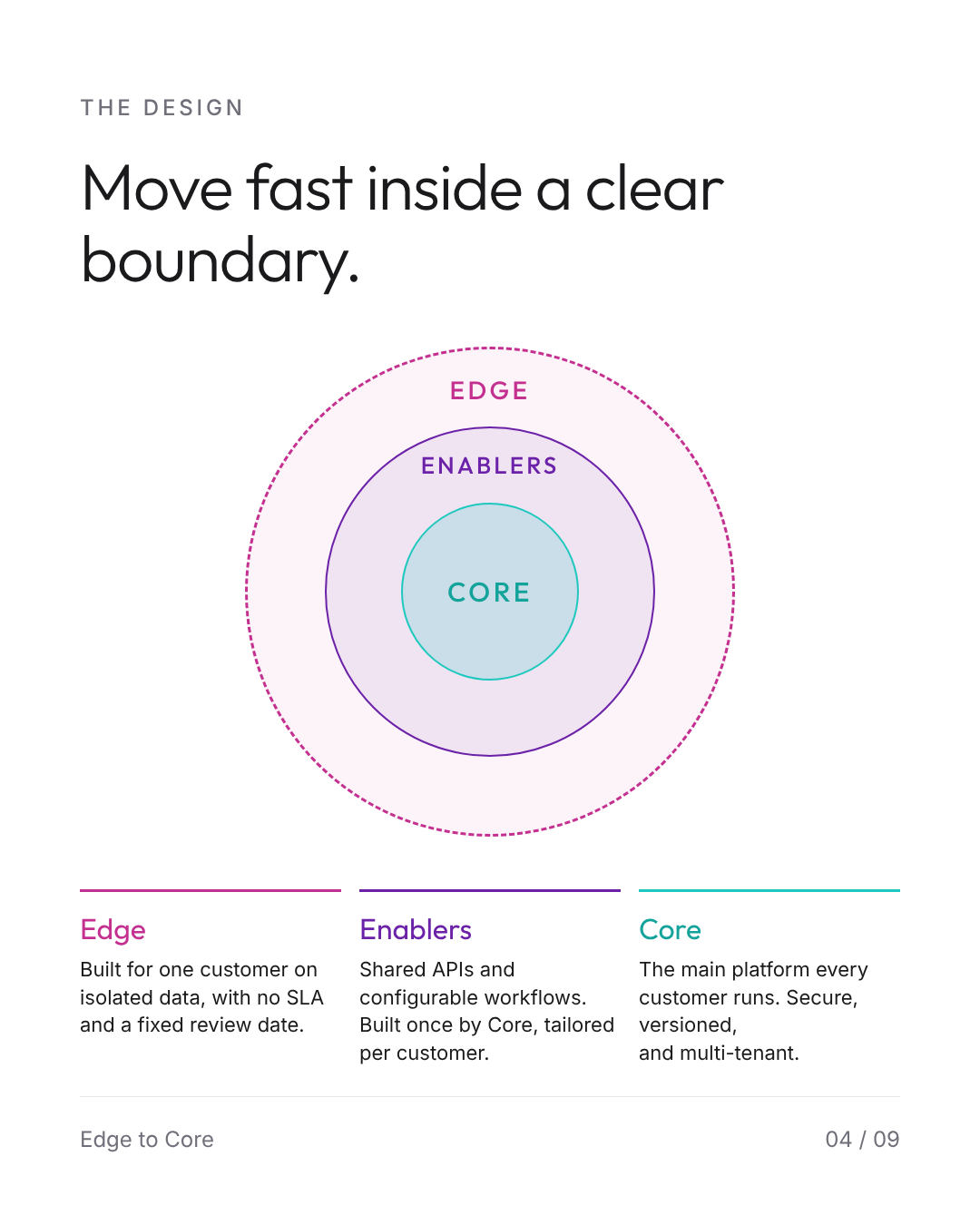
The Core, Enablers, Edge product architecture comes from Andy Hooper at Fabric, who designed it years before AI made the Edge this cheap. Building on his idea, I put together an operating model called Edge to Core to show how teams can move fast with AI inside a sandbox without letting fragile code bleed into the core product:
- The Fence: Fast AI experiments run at the Edge for one customer, on isolated data, with a 90-day kill date.
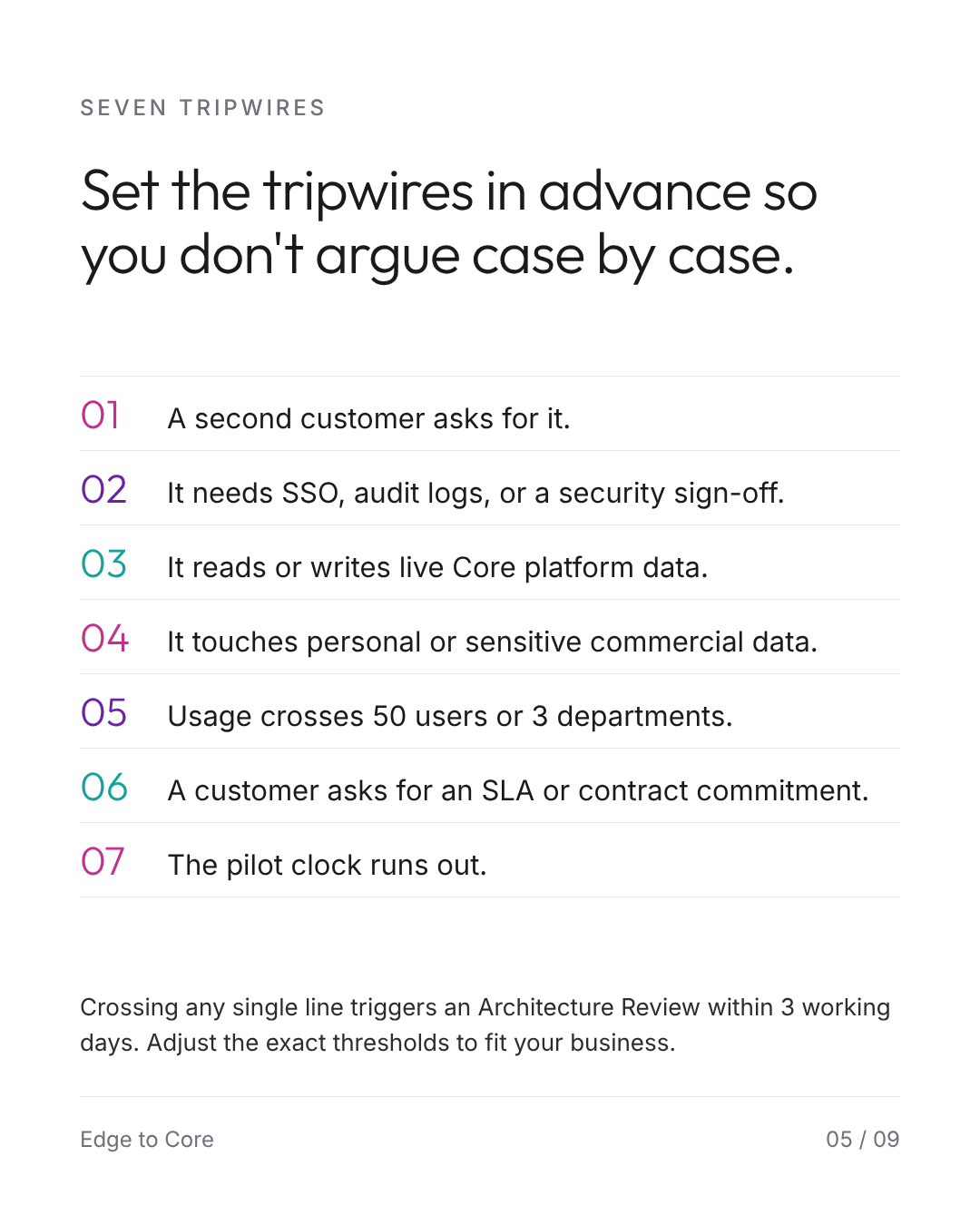
- The 7 Tripwires: The moment a second customer asks for it, or it needs SSO, core data access, or 50+ users, it triggers an Architecture Review.
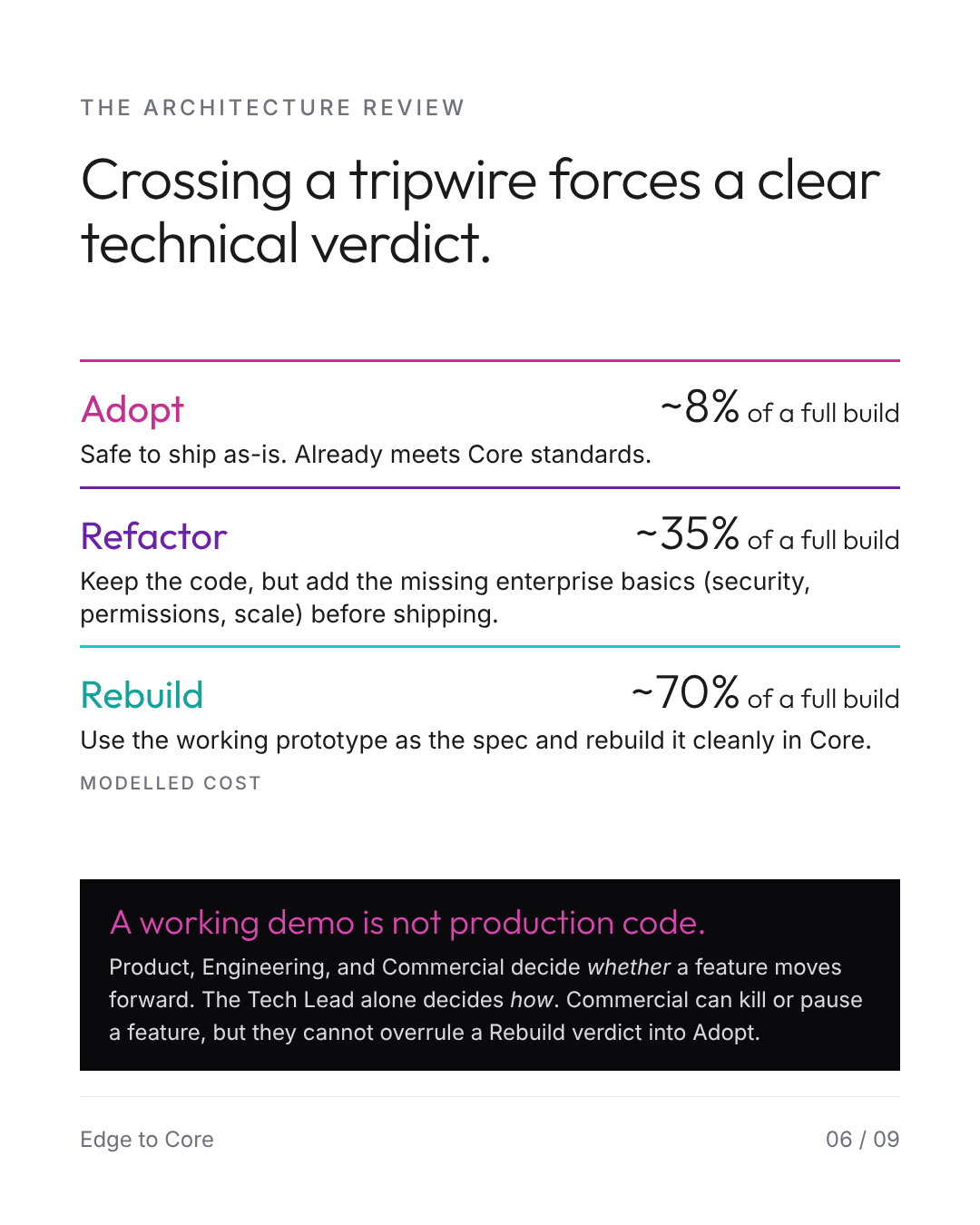
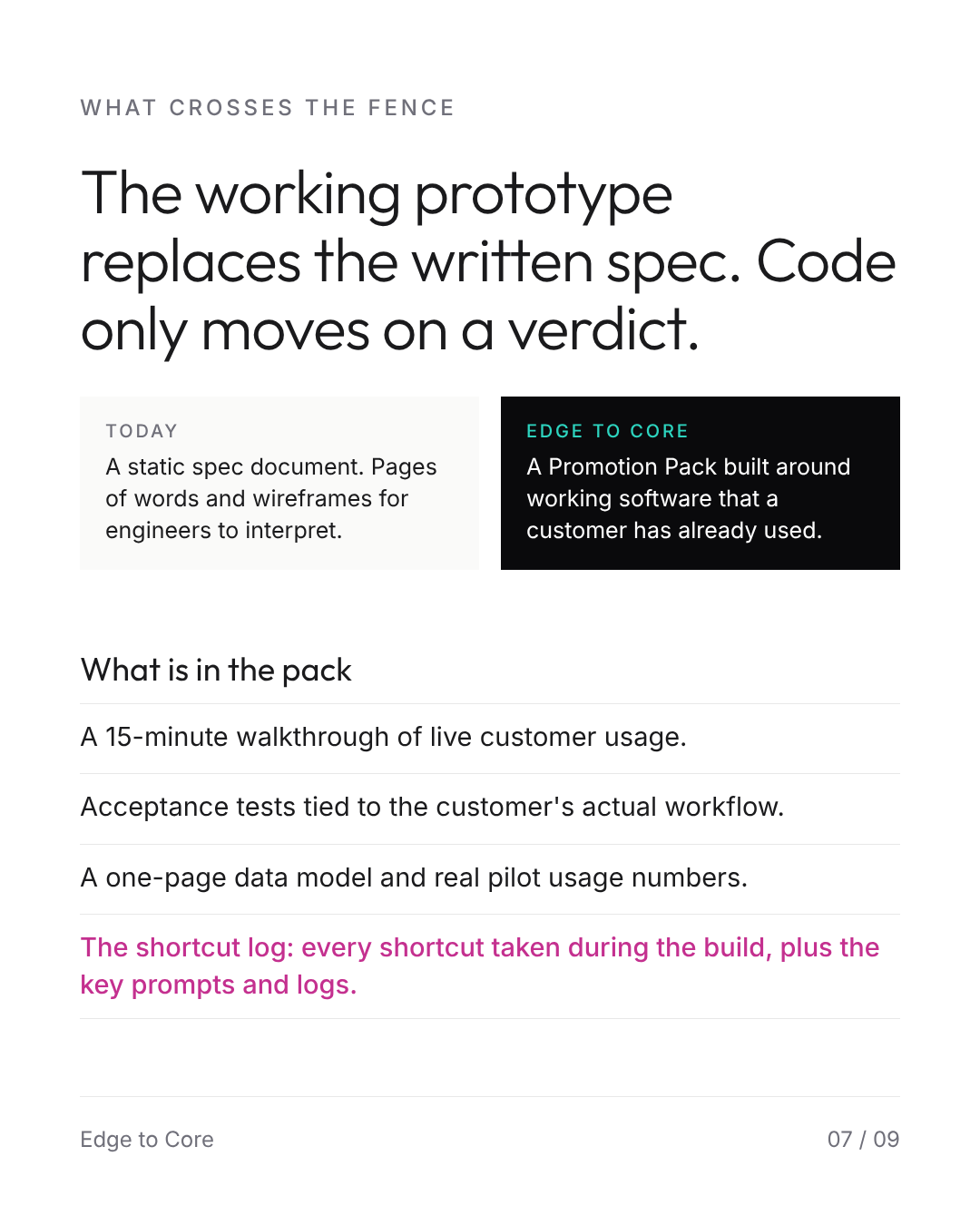
- The Verdict: The prototype crosses the fence only as evidence. A named technical lead makes the call: Adopt, Refactor, or Rebuild.
The main mechanics are in the 9 slides below. For the full working paper with the 3-year cost model and role definitions, message Colin on LinkedIn or write to hello@reinessence.tech.
Where does your team draw the line between a fast prototype and production code?
Sources
- Aventis Advisors: https://aventis-advisors.com/software-valuation-multiples/
- Veracode, 2025: https://www.veracode.com/press-release/ai-generated-code-poses-major-security-risks-in-nearly-half-of-all-development-tasks-veracode-research-reveals/
- McKinsey: https://www.mckinsey.com/capabilities/tech-and-ai/our-insights/tech-debt-reclaiming-tech-equity
The full mechanism — how absorbed custom work prices as a services business, and how the shape is resolved — is in the report →
Where this note leads: the papers behind it, in reading order.