Both are right, at different stages of the same feature
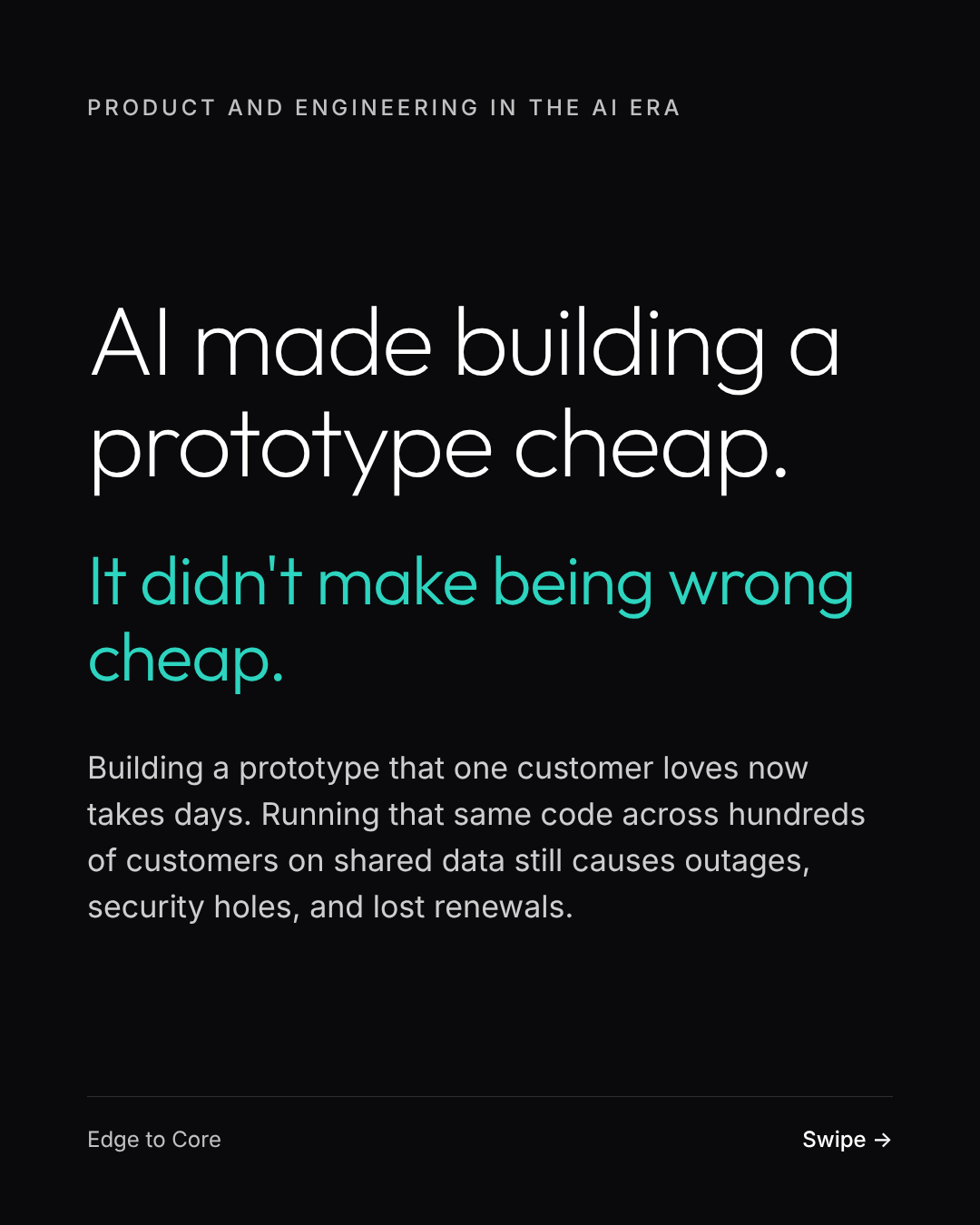
AI has made building a working version of software cheap. It has not made being wrong in production cheap.
Read the note →One practical idea each, drawn from the papers and the live mandates behind them.
AI has made building a working version of software cheap. It has not made being wrong in production cheap.
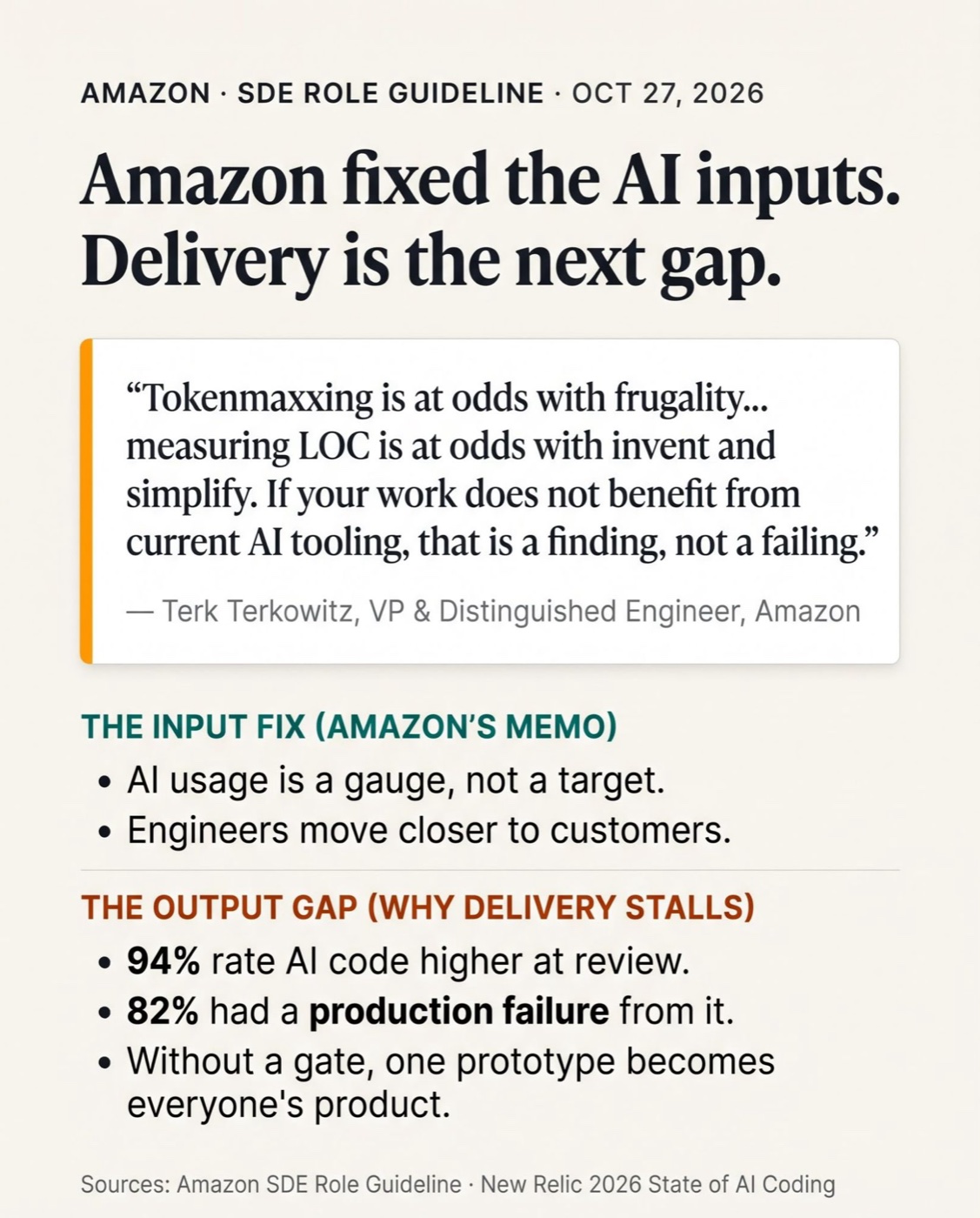
Read the note →Everyone is quoting Amazon's warning against "tokenmaxxing" this week. But the most revealing line in Amazon's new engineering memo isn't about the engineers avoiding AI.
Read the note →Most software owners prepping for a sale do the standard cosmetic cleanup: cap professional services on the P&L and present a "clean" SaaS revenue mix. Sophisticated buyers don't buy it.
Read the note →Andy Jassy’s operating principles at Amazon map to the rules we use to turn around 25-to-300-500 person B2B software companies.
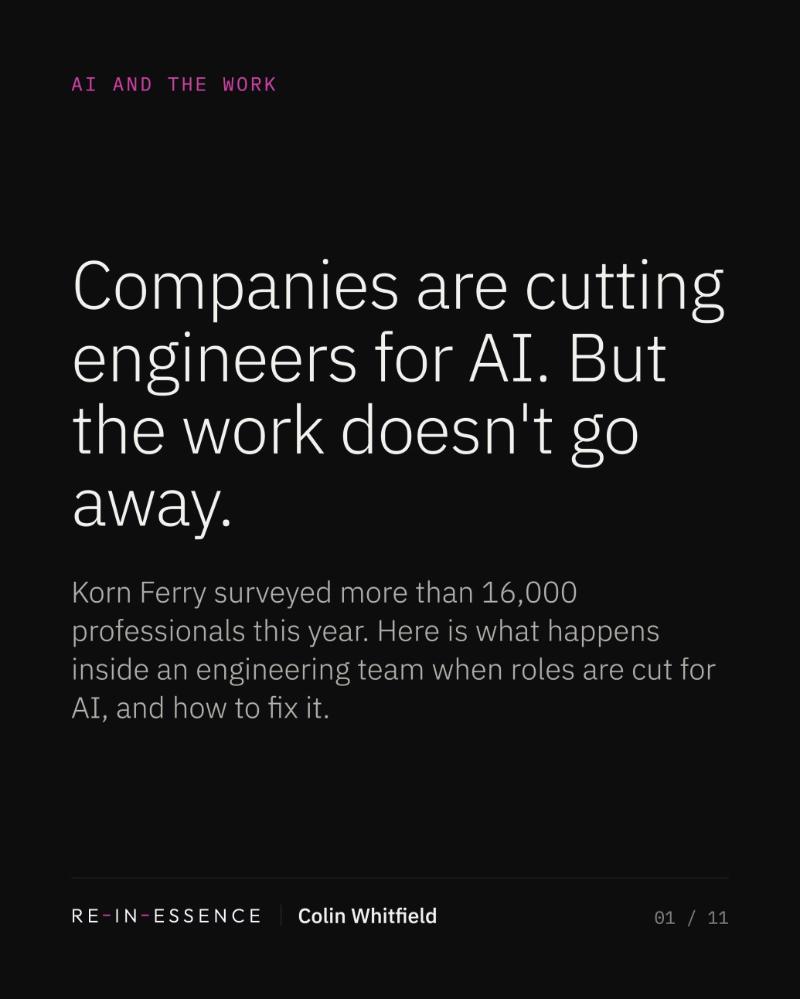
Read the note →Most companies didn't replace their junior engineers with AI. They just gave their senior engineers a second job.
Read the note →Usually, it costs them more than a full turn of revenue on their exit multiple.
Read the note →Distributed AI governance isn't just a regulatory concept—it is the best mechanism we have for training safer, more aligned systems.
Read the note →And the market prices it exactly that way.
Read the note →Delivery is not just a cost line; it is a valuation input. In a company that took on custom work to grow, it is the largest input nobody is actively managing.
Read the note →Systems scale whatever shape is already there. Org design, people, process, systems — the strict order, arrived at by trying it backwards.
Read the note →